


How to help your dog understand where to pee
The Method intervenes as little as possible: it creates the conditions for your dog’s own instinct to lead him to PIPPI. We guide you, step by step.
What we ask of you (and what we give you)
Every dog starts from a different place. PIPPI might arrive in a home with a puppy, an older dog, a dog used to training pads, a dog who has always done his business outside, or a male who already marks several spots in the house. It can help for a time when the dog can’t go out, when travelling, when you are the one who finds it hard to go out, or it can simply become an everyday habit.
Some principles apply to every dog, but no two dogs are the same.
If you are willing to be a little patient, you are in the right place. If you are looking for something that works on its own without you doing anything: it doesn’t exist, here or anywhere else.
A gesture your dog already knows
With poo it is usually easier: the dog squats and gets used to one particular area, such as a mat. Pee is different: a male dog, especially a small breed, needs to go several times a day, and a walk doesn’t always come at the right moment. That is why he needs a precise, recognisable spot where he can do it.
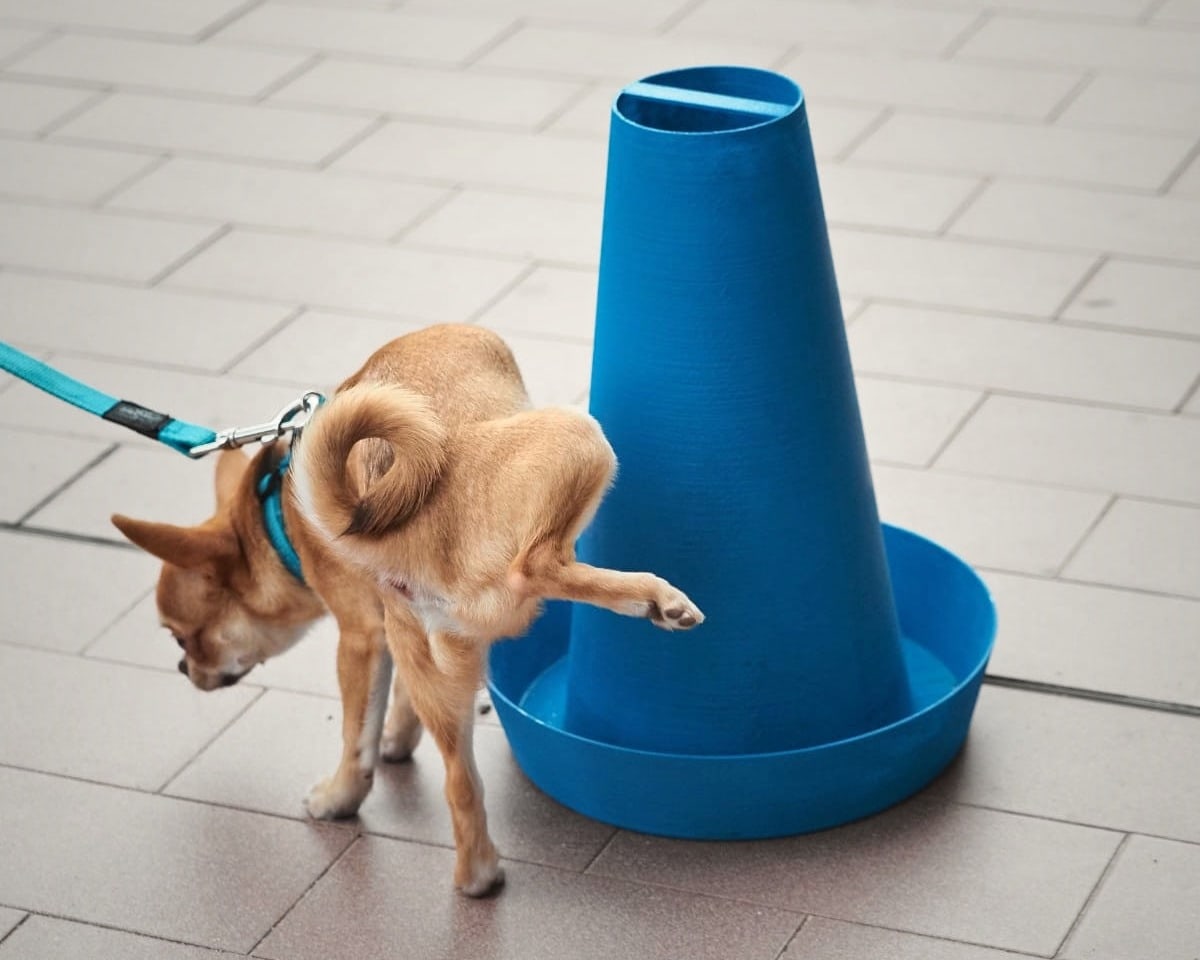
A male dog marks vertical surfaces to leave a message “at nose height”. It is his instinct, described by the American Kennel Club.
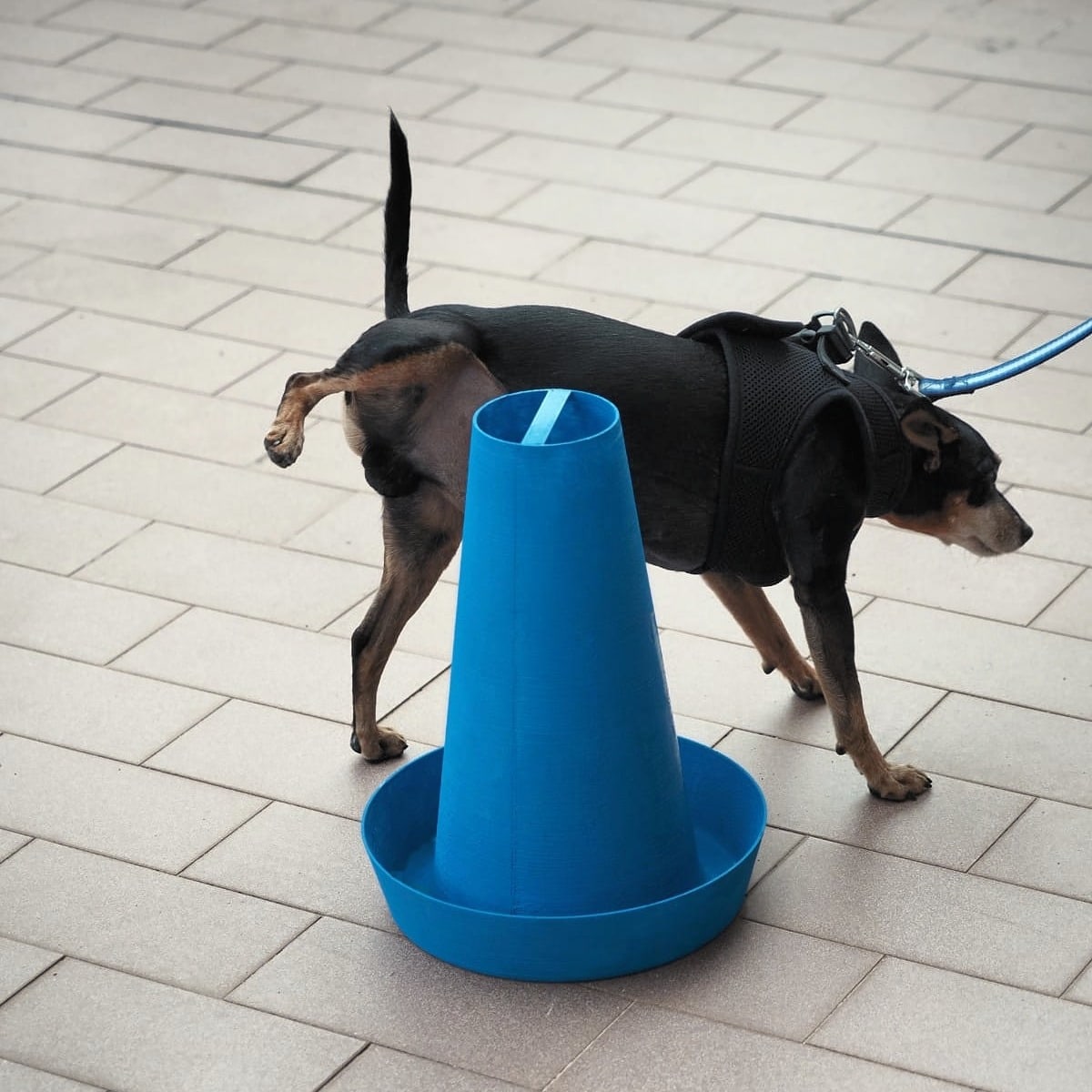
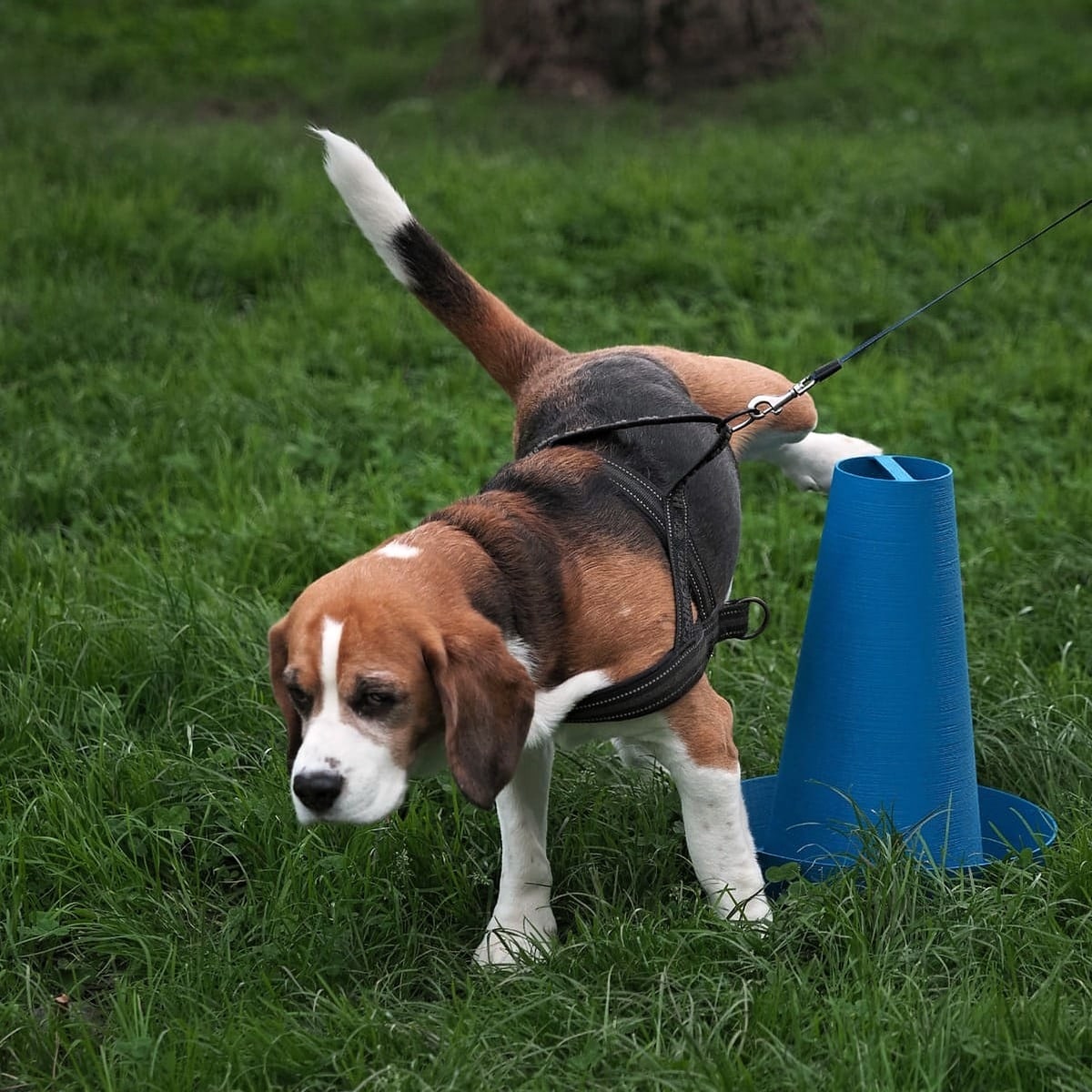
PIPPI is made to work with it: the male approaches a vertical spot, walks around it, chooses his position and lifts his leg. Dogs can learn new habits. PIPPI was created to make this change more natural, and it can become a meeting point between what we want and what comes naturally to him.
At first, though, it is something new in his surroundings, and a dog set in his ways may take a few days to feel at home with it.
The nine points of the Method
- 1
Placement comes first. A dog doesn’t pee just anywhere: smells, the routes he takes and the parts of the house he uses all matter a lot. So don’t choose the spot that suits you best: first look at how your dog uses the space.
- Where does he sleep?
- Where does he eat?
- Which door does he use to go in and out?
- Which spots does he already check or mark?
- Where is the edge of his territory?
PIPPI has to fit into this logic. A spot that makes sense to him can make everything easier; a spot that doesn’t can slow things down. The rule is: watch your dog first, then choose the spot.
- 2
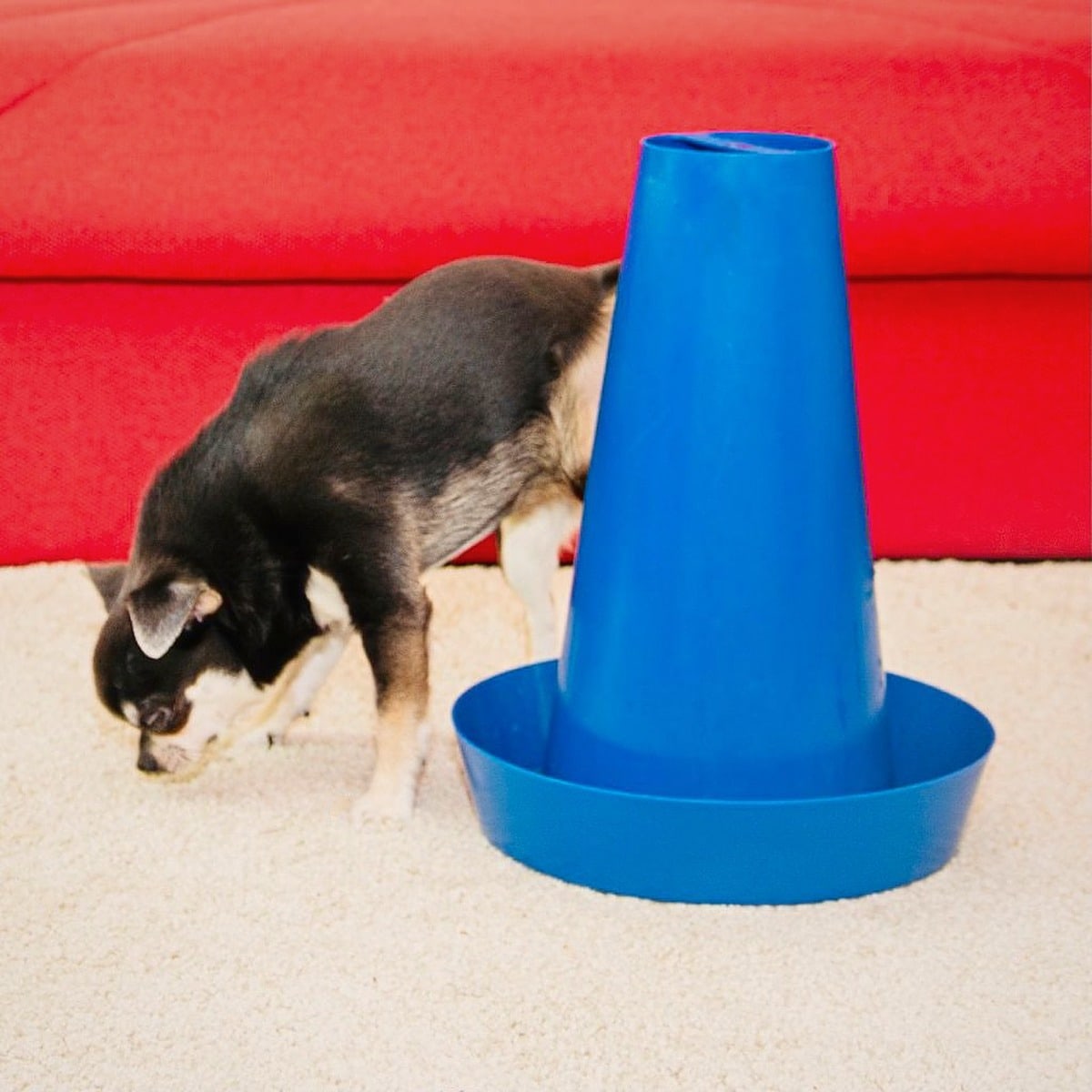
Leave him room to walk around PIPPI. Don’t squeeze it between furniture, walls or objects: your dog needs to be able to approach it, sniff it and walk around it. Place it at least 30 cm from the wall, so he can keep his balance when he lifts his leg. The cone shape offers different slopes: walking around it, your dog can choose for himself where to rest his leg or bring it close, while staying steady.
Don’t decide which side he should use: let him choose.
- 3
Scent is his language. We mostly look with our eyes; a dog understands much of what surrounds him with his nose. That is why a familiar smell can help him understand what PIPPI is for. But every dog reacts in his own way.
A dog who goes out a lot and meets other dogs is usually more used to new smells. A dog who lives mostly indoors may need to take it more gradually: it doesn’t mean he rejects it: he just needs his own time to get to know something new.
With an adult dog set in his ways, we usually advise against adding other stimuli, such as scent lures, unless they are needed: every new thing takes him extra time. Scent is a help to weigh up, not a step you must take: if you are unsure about your dog, ask us.
- 4
A dog’s time is not our time. Some dogs use PIPPI almost straight away, others watch it for a few days, others need several weeks. Don’t compare your dog with someone else’s: if he takes longer, it doesn’t mean he has a problem. Being consistent matters more than being quick.
One of the most common mistakes is rushing: moving PIPPI too soon, changing approach after a few days, deciding straight away that he rejects it. If at first he watches it, avoids it or barks at it, don’t force him: let him get used to it on his own. Sometimes we are the ones who need to slow down.
- 5
What about colour? Dogs don’t see the world the way we do: some shades, such as blues, stand out better for them than others. But colour is not what makes him pee on PIPPI: what matters most is the spot.
Blue is recommended especially for a puppy, because in the right spot it adds a sign he can see well. For an adult dog set in his ways, on the other hand, we usually recommend a less striking colour: something new and very visible can also take a few more days to become familiar.
- 6
If you have more than one dog. With several dogs you can use their own language: sometimes it helps to put a small trace of one dog’s pee on PIPPI, to make the others curious. But you have to choose whose. If one dog is very territorial, his smell may turn PIPPI mainly into his own spot; the smell of a younger or less dominant dog, on the other hand, may attract the others more.
If there is also a female at home who already uses training pads, at first you can put PIPPI near that area: it becomes a solution for both. There is no formula that works the same for every family: what matters here is watching each dog, and we can help you think through your situation.
- 7
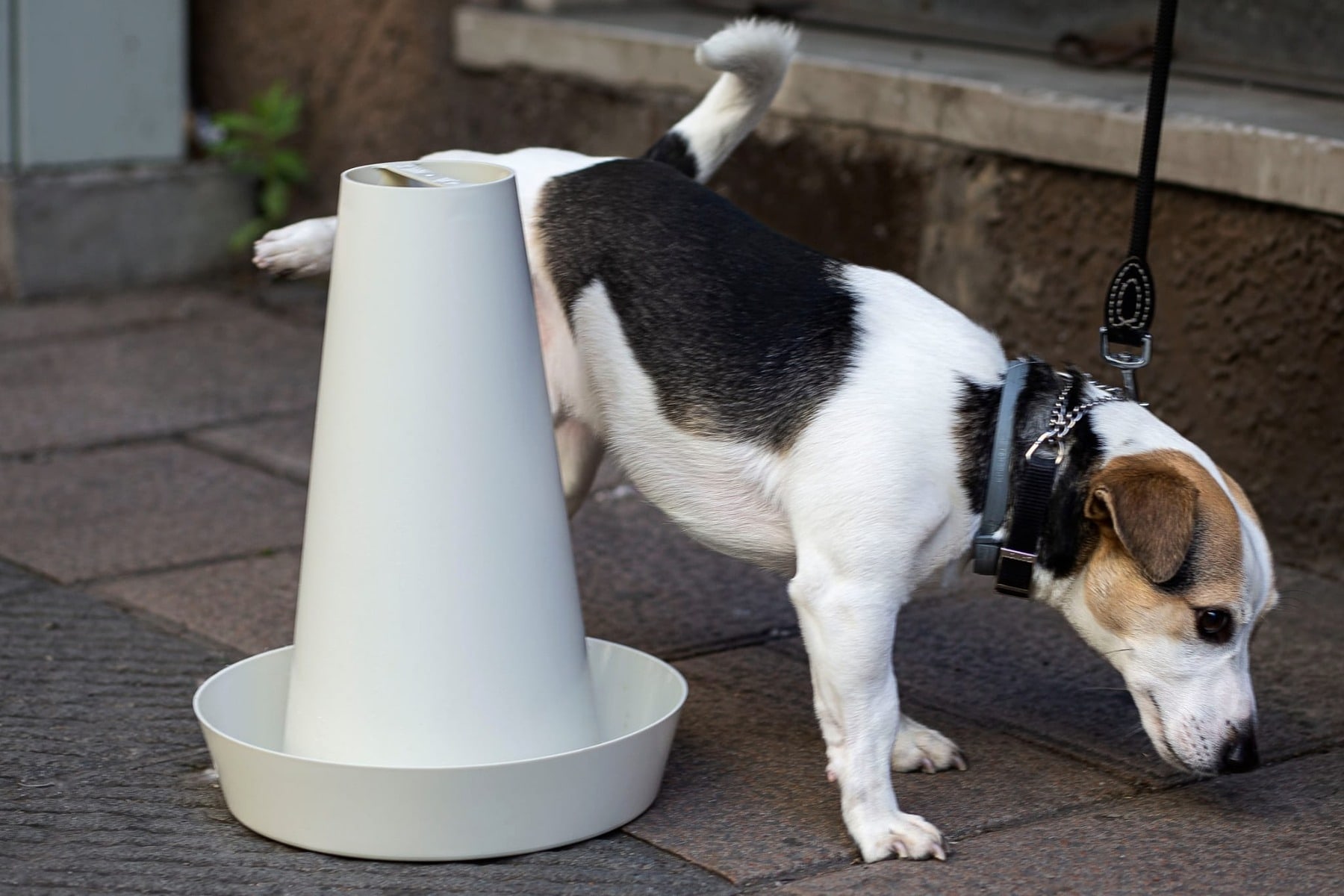
What if he already marks all over the house? It is one of the questions we are asked most often. Putting PIPPI down and waiting for him to change overnight is not enough: he needs guiding. First you give him the right spot. When he uses it, you reward him. If you catch him going back to an old spot, you interrupt him and take him to the right one.
It is much easier to ask him “do it here” than just “don’t do it”: that way you give him an alternative that respects his need. Once he understands there is a place where he is allowed, he thinks: I can go here. And that is what the new habit is built on.
- 8
Rewards first, deterrents later. When he uses PIPPI, reward him: your voice, a treat, a stroke or simply your enthusiasm can help him link that act to something good. Only once he has understood which spot is the right one can a deterrent on the old spots make sense, in some cases.
Be careful: a deterrent doesn’t teach him on its own where to pee, and it should not be used near PIPPI, because it would make the right spot unappealing too. First you guide, then you reinforce, and only after that, if needed, you discourage the old spots.
- 9
Three words to remember. If we had to sum up the whole Method in three words: Placement. Scent. Patience.
PIPPI is designed to work with the natural behaviour of the male dog, but it is up to us to give him the right conditions to understand it. You don’t fight against your dog: you learn to talk to him with signs that make sense to him.
And if you have questions, we are here
These are the general principles, but behind every dog there is a different story. Tell us about your dog: how old he is, where he usually pees, whether he lives with other dogs, whether he already uses a training pad, whether he marks, whether he goes out often and where you have put PIPPI. From there we help you find the way that suits him best: the Method starts from a few simple rules, then adapts to your dog.
Help is included, and a person will reply. You can reach us on WhatsApp (+39 342 369 9798) or by email (info@pippi.store).
How long it takes
Age, character, past experience, habits and surroundings all change the timing a lot. That is why we don’t promise you a date, or that it will work with every dog: no one who is honest can.
PIPPI helps keep your home clean; it is not a treatment. If an adult dog pees anywhere, pees little and often, struggles to pee or suddenly changes his habits, the first step is your vet: there could be a cause to rule out, not stubbornness.
When nothing seems to happen
In the first few days it may seem that nothing is happening. That is not the case: your dog is working out what has come into his surroundings, and you can’t see that work.
The progress that counts (even without pee)
- He goes up to the cone
- He sniffs it
- He walks around it
- He walks past it without fear
If you see even one of these in the first few days, the work has begun: it is time to keep going, not to give up.
What if he still won’t use it?
Haven’t tried the Method yet? Start there.
Is your dog peeing anywhere, or has he suddenly changed? The first step is always the vet.
You followed everything and it still doesn’t work for your dog? Write to us and we will help you get him to use it.
Nobody can promise you that your dog will learn: we promise you the Method and our help.