


Your dog marks indoors: what he is saying (and how to handle it)
A few drops, always upwards, always in the same spots: it is not pee that slips out, it is a message. And no, he is not doing it out of spite.
If his behaviour has changed suddenly, the first step is the vet: this guide only covers the practical side.
In this guide
Marking is not peeing
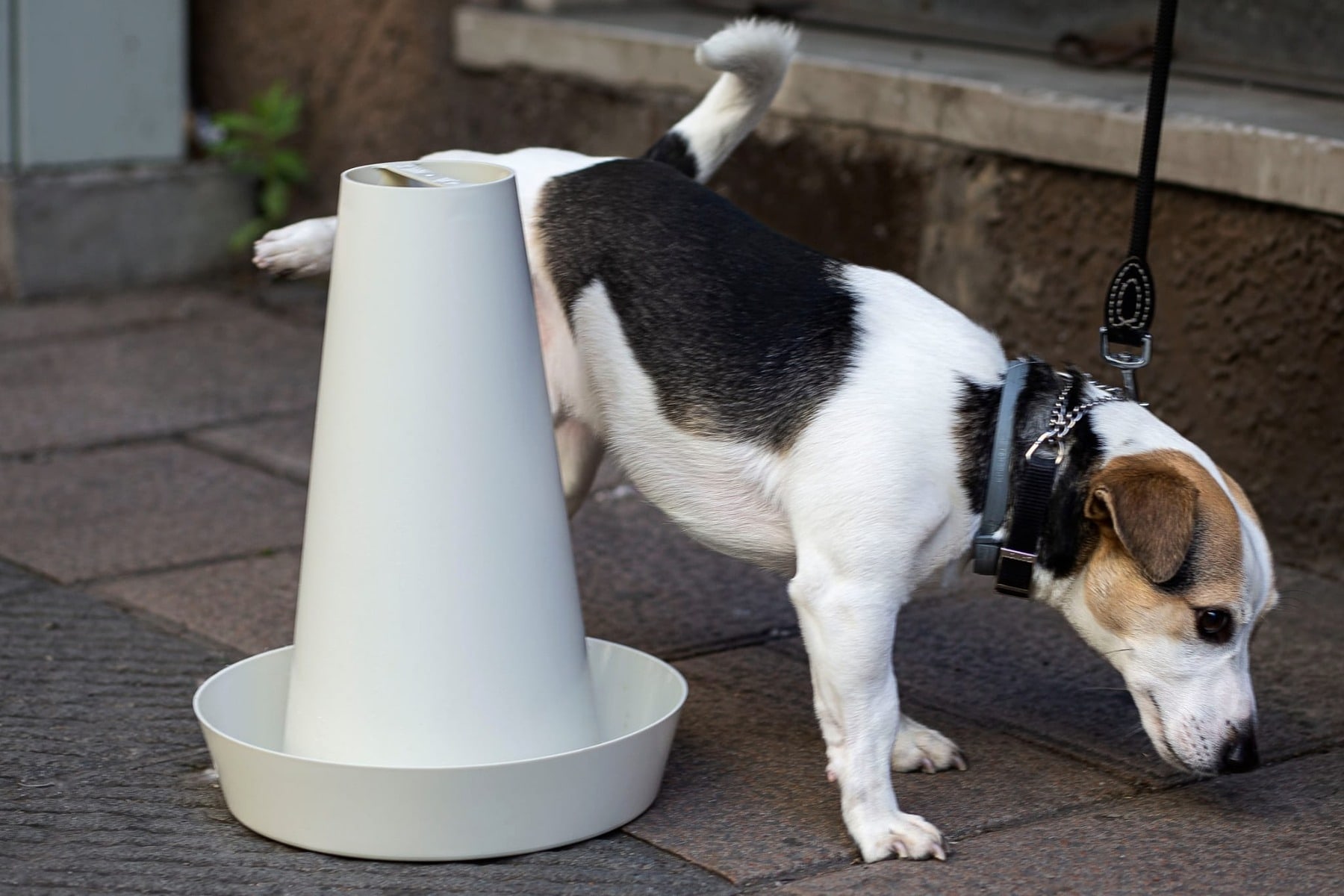
They are two different acts. Peeing empties the bladder; marking is a message: a few drops, almost always aimed upwards (the corner of the sofa, the door frame, the table leg), often on the same spots, often after something new has happened at home. The male leaves his calling card “at nose height” for other dogs: it is a documented instinct, as the American Kennel Club also says.
No, he is not doing it out of spite
It is the most widespread and most harmful belief. “Spite” would mean planning to make you angry: that is not how a dog works. He marks because something in his world calls for an answer (a new smell, a guest, a house move, a new dog in the building), not to get at you. Reading it as revenge leads to telling-offs, and telling-offs only teach him to mark in secret: the problem stays, but you no longer see it.
The right way to handle it
1. Remove the smell from the wrong spots. Every marked spot that still smells of pee is an invitation to mark it again: enzyme cleaner, not fragrance (here is how).
2. Give him the place where his message is allowed. The instinct does not switch off: it gets channelled. A fixed spot with a vertical target (PIPPI vertical toilet) tells him “your message is allowed here”. Beyond that, the steps of the Method for dogs who mark help: you offer him the right spot and reward him when he uses it. When you catch him elsewhere, you interrupt him and take him there. If his favourite spot is the wall next to the training pad, start again from the guide to the toilet corner.
3. Reduce the sources of anxiety you can reduce. New things introduced gradually, his space respected. If marking shoots up with obvious stress and does not settle, a behaviourist is an investment, not an admission of defeat.
Cases that go to the vet first
Marking that appears suddenly in an adult who never did it; frequent drops even away from the “message spots”; effort or discomfort when he goes. Health problems are ruled out first, then you work on the habit.
What about neutering? It is often talked about as a solution: the decision is a medical one, made with your vet, for the individual dog. Ask the vet too what to expect for marking, because it is not a switch, and no serious guide can promise you that it is.
The full routine that channels his instinct:
Written by
The PIPPI team: a small Italian company, the same one that answers on WhatsApp. These guides go with the Method: no promises and no diagnoses (those are for the vet).